
Where Are We Today?
(10 minute read)
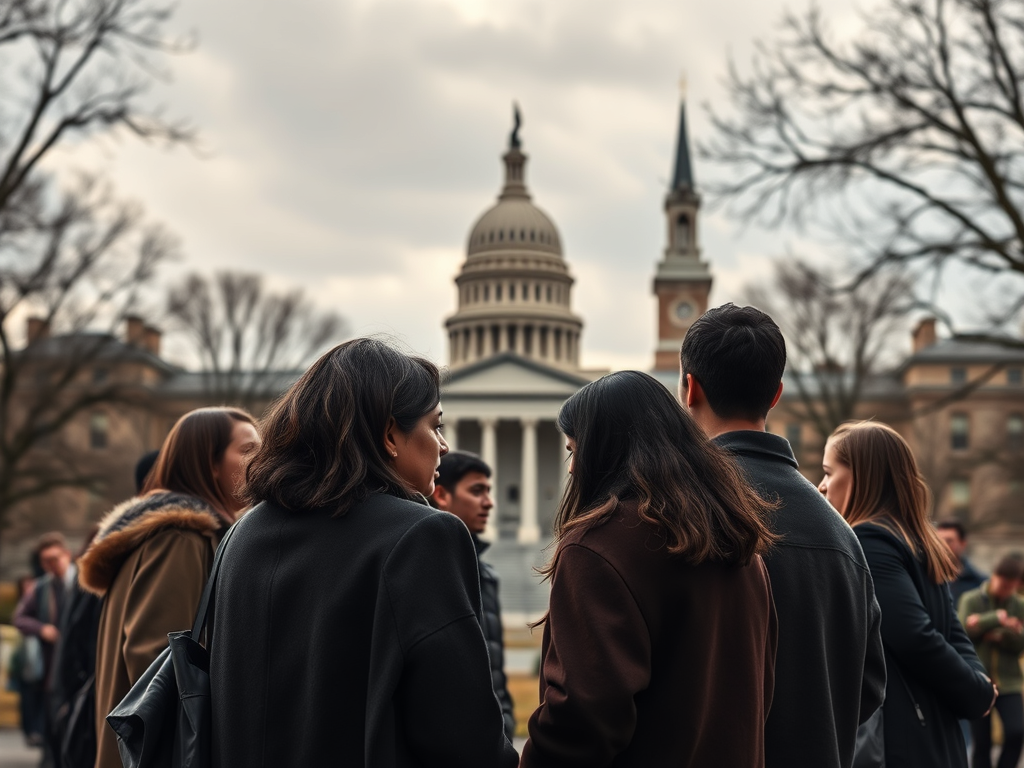
There are many today that say that the crises of the university has never been more dire.
The democratic norms of the past 250 years are being erased. The separation of political powers, of church and state (and more) are intentionally ignored. The daily headlines are rife with religious fervency masked in political rhetoric.
The norms are gone. Maybe forever. The vertigo it creates for those of us still living with democratic ideals is palpable.
I wrote about this religious fervency in part two of this series. Since then it has escalated.
In her June 19, 2025, Letters From An American, Heather Cox-Richardson wrote about the recent conflict in the Middle East. She documents the U.S. religious nationalism that is affecting governing decisions:
“[T]he evangelical MAGA wing sees support for Israel as central to the return of Jesus Christ to Earth in the end times. Earlier this month the U.S. ambassador to Israel, former Arkansas governor Mike Huckabee, said the U.S. was abandoning its longstanding support for a Palestinian state. Huckabee is a strong supporter of the expansion of Israel’s settlements. After the Israeli strikes [in Iran], Huckabee messaged Trump to urge him to listen to the voice of God. In an apparent reference to Truman’s decision to drop a nuclear weapon on Japan at the end of World War II, Huckabee told Trump: ‘No President in my lifetime has been in a position like yours. Not since Harry Truman in 1945.'”
Because of a gross misunderstanding and ignorance of Christian and Hebrew scriptures, evangelical dogma is apocalyptic. Evangelicals long for the annihilation of god’s perceived enemies and, therefore, their perceived enemies.
“…[Revelations] is one of these books that people know about but almost nobody reads. And the people who start reading it find it so confusing and so bizarre, they just give up, and they never get to the end, with the exception of evangelical or fundamentalist Christians who use it to kind of mine for pieces of the puzzle that will explain what’s going to happen in the future …throughout most of Christian history, to the surprise of readers today people did not read Revelation as a prediction of what’s going to happen in our future.”
Bart Ehrman, NPR, Fresh Air, April 3, 2023 (emphasis mine)
Evangelicals, like Huckabee, believe a “Great War” will take place. Either before, during, or after that war (depends on who is telling the story) Jesus will “descend from the clouds.” Literally. Everyone on earth, and they mean everyone, will see this event at the same time. Though the logistics of that are astounding. (“All things are possible…” is the cop out answer). Then Jesus will “usher in his kingdom of peace and reign for a thousand years.”
Of course who will help him with all that ruling and reigning? Only the true believers! When there are that many Christians feeling powerless and disenfranchised this story is an elixir on steroids.
“The meek shall inherit the earth? Fuck that!”
“Yeah, I know Jesus said, ‘Be a servant like I am. I’ve come not to be served but to serve.’ Ok, Buddy Christ. But not now. I am already basking in that powers that be.”
Evangelicals believe that authoritarianism is sanctioned by god. Democracy is, therefore, irrelevant. All of it goes away when Jesus returns. They believe they are the generation that will make that happen. They also think they will to be handsomely rewarded for it.
This is why they voted for and have a hard-on for Trump. It is also why they say they are not worried what he will do. They believe he is their best shot to make their twisted apocalyptic scenario a reality.
Think this theory is a little too thin? Let’s take a look at another peculiar example of religious fervency. Foreign affairs specialist, Tom Nichols, on Trump’s speech after nuclear targets in Iran were bombed by the U.S. military:
“In a strange moment, Trump added: ‘I want to just say, we love you, God, and we love our great military.’ Presidents regularly ask God to bless the American nation and its military forces—as Trump did in his next utterance—but it was a bit unnerving to see a commander in chief order a major military action and then declare how much ‘we’ love the Creator.”
Tom Nichols, The United States Bombed Iran: What Comes Next? The Atlantic, June 21, 2025 (emphasis mine)
Either Trump finally found Jesus (who knew he was missing?) or (color me cynical) he’s playing to the base. Or (not a stretch here) he is actually beginning to believe in the messianic role Evangelical sycophants pump him with.
With this kind of jacked-up-power-trip the spiritual testosterone to judge others and treat them with disdain follows. Dropping a bomb and vaporizing 16 million people as ambassador Huckabee seems to suggest? Piece of cake when people are this delusional.
And shoving the U.S. military into a conflict in the Middle East? Nothing new there, but to tag actions of war with your loyalty and love for a perceived creator? Well, that’s the shit that causes terrorists to fly planes into buildings.
Catastrophic decisions like this makes rulings of lesser consequences seem quaint. With great relish they are chipping away at our institutions.
What is happening to colleges and universities is well documented. How it effects faculty and administrators is shocking.
Ask Dr. Anna Peterson, professor of religion at the University of Florida what the campus climate is like. She authored an op/ed piece in May 2025 for the NYTimes (linked above).
“…I’ve seen my colleagues harassed and investigated for addressing topical issues, even outside of the classroom. The climate of fear gives the government precisely the result it wants …stifling the sort of open and civil discussions that lead students to develop their own views.”
How Anti-Woke Ideology Transformed My College, Dr. Anna Peterson, NYTimes, May 11, 2025, Page SR4
Faculty members go to great lengths to make classrooms safe. For anyone outside of academia causing that much damage is unconscionable. Their twisted inner convictions are based on authoritarian beliefs that they are in control. What they think and feel on the inside is demonstrated on the out.
“Finally, we are calling the shots and you will do as we say. We’re on a mission from god.” When Jake and Elwood Blues says that, it’s funny. Anyone else and it’s a farce.
But, I have to remind myself, as a nation we’ve been in dire circumstances before. Just not in my lifetime. I’m guessing not in yours.
So where is the silver lining, if it exists? What is real and what isn’t? And how do we equip ourselves to call out the difference?
The Mission of Teaching

Visual Communication: Images with Messages by Paul Martin Lester, 5th Edition, Cenage Learning, 2010
“The more you know, the more you sense. The more you sense, the more you select. The more you select, the more you perceive. The more you perceive, the more you remember. The more you remember, the more you learn. The more you learn, the more you know.”
— Paul Martin Lester, Visual Communications, 5th edition, Cenage, 2010
Studying the “art” of teaching and learning is an art form. If one teaches one needs to know how humans learn. The learning circle shown above is a visual example of that.
The more we learn the more we can define. The more we define the more we can understand. The more we understand the more we will recall. The more we can recall the more we will learn. And the cycle continues.
As institutions of learning come under fire it is vital that educators confidently stand our ground. To do that we need to be grounded, to know why we are here doing what we do. To stand against those who intimidate, harass, and threaten.
They have no fucking clue what we really do.
To stand our ground we need to know what our purpose is. The only other option is to bow and drop a knee to them. Anyone who has seen the 1943 movie This Land Is Mine, knows what that means. Whether you are a teacher or not the film is inspiring.
If you are a musician at heart you will play your instrument …whether you are in a band or not. If you are a painter you’ll paint. If you are a writer you’ll write.
Musicians play, painters paint, writers write, and teachers teach.
After rejecting the teaching gimmicks my time now is spent gathering and providing course work. In other words, teaching. At the same time I purposefully model to students my commitment to being a lifelong student.
It helps that I attended and taught in liberal arts schools. Historically this is where reasoning skills are learned because gaining knowledge isn’t enough. There is too much information in the world. It is impossible for anyone to know everything. Learning never stops. But learning isn’t enough.
A liberal arts education provides the “what,” (knowledge) to be successful in one’s career. It also supplies the reasoning formula we use for answering the tougher “why” questions of life.
Everything cannot be learned from a book.
The Liberal Arts Playbook
Suspending judgment, gathering information, questioning, and analyzing will help solve any of life’s problems.
And you don’t need a liberal arts education to implement them.
Excuse the corniness, but, “Life IS like a box of chocolates. You never know what you’re gonna get.” A liberal arts education equips us for whatever life throws at us (the one “you’re gonna get”)
“It is not necessary for you to leave your house. Stay at your table and listen. Don’t even listen, just wait. Don’t even wait, be completely silent and alone. The world will offer itself to you for exposure; it cannot do otherwise; it will writhe in ecstasy before you.”
Franz Kafka, Aphorismen (II,4), #109, The Kafka Project, translated with Google translation
For a majority of the world this Kafka quote will forever be an enigma. I had a copy of it hanging in every one of my campus offices. It is inspiring because it is the answer to the human condition as Kafka sees it.
For Kafka the world was a mystery. His personal and professional struggles are well documented. Throughout his life it is safe to say that many of the institutions that existed were a frustration to him. The world was random, harsh, a mess, and institutions seemed to only serve to disappoint him.
And, yet, the human race fascinated him. Despite all of the things that humans suffer they always seem to survive, even thrive. Kafka believed that there could only be one thing that drove humans to keep moving forward.
Faith.
Faith is the belief that something is true without having any evidence that it is. Though Kafka was an atheist he saw the human race as one that was full of faith. Not a faith in religion or higher power, though he recognized that type of faith existed. No, the faith that Kafka witnessed was one of human hope.
Faith is the motivation that gives us the tenacity to believe in a better future. For Kafka it is the sole reason we have continued on as a species. The mystery is not in a higher power. It is the tenacity to continue to exist despite everything else saying we shouldn’t.
Faith.
Each generation thinks “We can be better” and strives to make a better world.
Faith.
The institutions of higher learning are not the buildings and campuses. Institutions are made up of people. If the university is in crises then the people in them are in crises. To come out of it we have got to be the ones determined to be the solution.
The only way we can do that is to know why we are here in the first place.
