(7 minute read)
Key Takeaways:
- The university may be in crisis, but the deeper issue is the personal crisis many educators experience internally
- In chasing performance, trends, and effectiveness, educators risk losing their integrity and grounded identity
- Good teaching is patient and formative — its impact is delayed, quiet, and more about cultivation than criticism
“The task of the modern educator is not to cut down jungles, but to irrigate deserts.”
C. S. Lewis, The Abolition of Man (New York: Touchstone Books, 1996).
Introduction
Institutions of higher education are facing increasing criticism from right-leaning movements in many parts of the world. As a result, colleges and universities often find themselves operating in a heightened state of concern. At the heart of the debate is the perception that they serve as centers for liberal ideas.
At times, universities have even been labeled “enemies of the people,” criticized for encouraging students to think critically and to engage with democratic principles. The values at issue include freedom of expression, thoughtful resistance to authoritarian tendencies, and a commitment to diversity.
We are witnessing significant criticism directed at the institutions I have served and cared about deeply. While such challenges are not new in historical terms, they feel unprecedented within my own lifetime.
The university is in crisis.
But what I am writing about here is not that crisis. I am concerned with a different one.
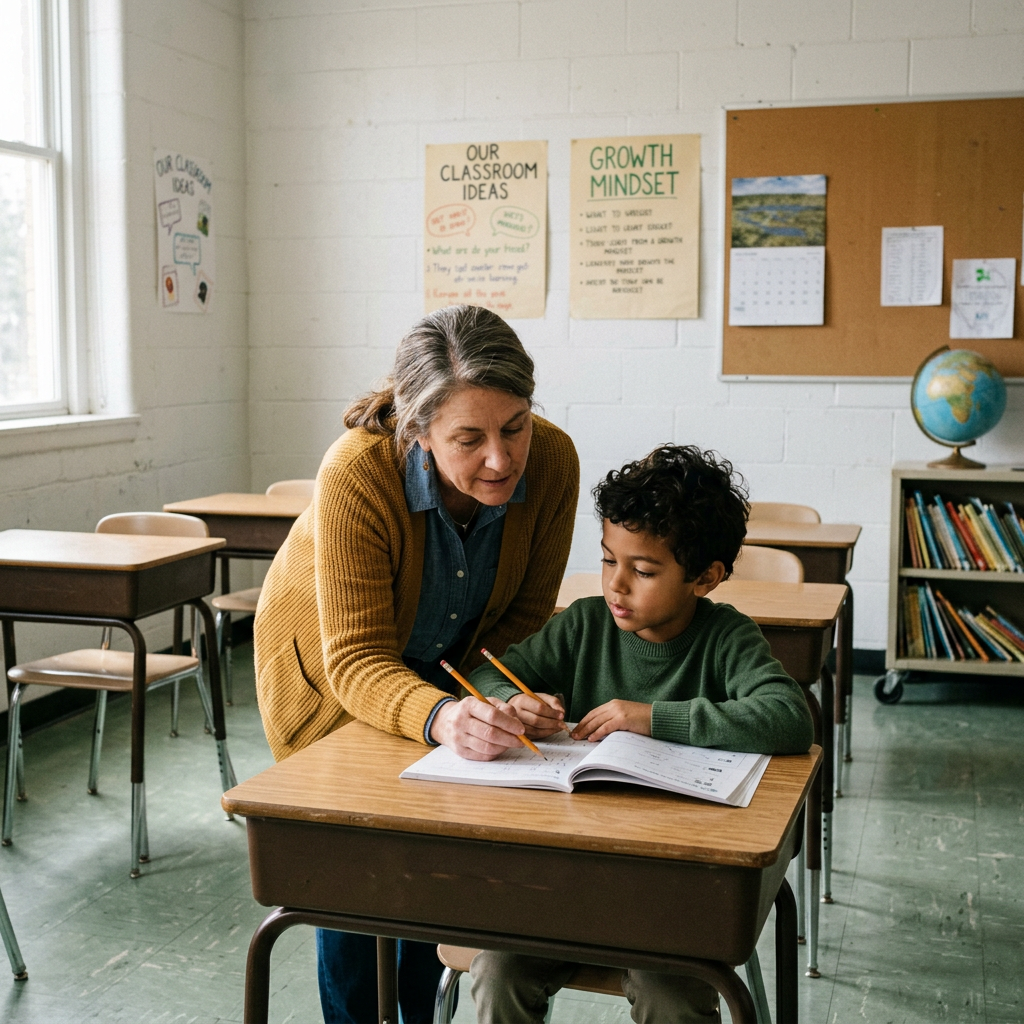
My life has been devoted to teaching, and I have cherished it deeply. Clarifying ideas and shaping them for others—whether in writing or in speech—comes as naturally to me as breathing. The process itself feels meaningful and, in many ways, quit sacred.
I am a teacher—of that I am certain. Yet I continue to see myself as a student of the craft. While I have grown in skill and experience, there is always more to learn.
A guiding influence for me has been Parker Palmer’s The Courage to Teach: Exploring the Inner Landscape of a Teacher’s Life. It is not a manual of techniques; rather, it affirms the “inner lives of teachers and learners”—the interior journey both teachers and students experience in the process of learning.
It is one of those rare books that can be life changing.
While memorization has its value, gathering facts and figures alone does not necessarily lead to a meaningful or productive life. What seems most important is how knowledge influences and forms us—for our own development and for the good of society. That is the deeper, more personal process at work.
Reading the top quote from C.S. Lewis, I am reminded of something essential about our human nature. Learning—analyzing, thinking critically, and reflecting—often stretches us to our limits. As students, we are invited to explore ideas we may never have considered before. That process can feel uncomfortable at times, yet, if we commit ourselves to the process, it has the power to change us in meaningful ways.
Author and linguist Steven Pinker compares teaching and communication to a kind of delicate brain surgery. The goal, he suggests, is to place ideas or facts thoughtfully “into the brain of another.” In this sense, learning invites us into careful reflection—drawing conclusions through reasoned thought rather than relying solely on emotion.
For professional educators, this kind of intellectual rigor often keeps us busier than we initially realize. Lewis’ metaphor gently highlights some of the challenges within our work. It seems to me that, at times, we may devote too much energy to being pioneers rather than tending carefully as gardeners. Much of this tendency is shaped by the expectations placed upon us. We are encouraged to refine our skills continually and to stay current with the “latest trends” in teaching.
So we spend an inordinate amount of time doing so.
Rather than simply “hauling water,” we often devote our energy to finding “innovative” ways to cut through the wilderness. At times, a great deal of effort goes into learning or developing the latest “teaching fad,” sometimes at the expense of steady, foundational work.
Considerable energy is often devoted to instructing educators on the latest trends in teaching, rather than simply encouraging them in the work itself. Approaches such as “Writing Across the Curriculum,” “Gamification,” and “AI in the Classroom” are examples of those trends. In earlier years, innovations included tools like “clickers” to measure student responses, activities built around isolating students’ “brain hemispheres,” and the idea of “flipping the classroom.”
No amount of performative technique or the newest technological tools can fully replace a “grounded” educator. Rather than focusing on “acting” the role, the most effective teachers simply embody it.
The admonishment of Morpheus to Neo when training in The Matrix movie suffices here.
Stop trying to be something and just be it. Easier said than done.
And by the way, just what the hell does just do it mean?
“…good teachers share one trait: a strong sense of personal identity infuses their work. ‘Dr. A is really there when she teaches’ …’Mr. B has such enthusiasm for his subject’ …’You can tell that this is really Prof. C’s life.’ …Good teachers join self and subject and students in the fabric of life.”
Palmer, The Courage to Teach
Good teachers possess a deep capacity for empathy. They remain grounded in their own humanity while recognizing and honoring the humanity of their students. They approach both their students and the teaching process with openness and appropriate vulnerability. These qualities are just as important as a strong command of their subject matter.
“Good teachers posses a capacity for connectedness. They are able to weave a complex web of connections among themselves, their subjects, and their students so that students can learn to weave a world for themselves. The methods used [by teachers] vary widely …[but the] connections made by good teachers are held not in their methods but in their hearts …the place where intellect and emotion and [being] will converge in the human self.”
Palmer
I have some thoughts about why educators can become distracted by the steady stream of new teaching methods. For one, they are exposed each day to a great deal of enthusiasm and promotion surrounding these approaches.
- Combine Digital with traditional teaching methods to create a Blended Teaching environment
- Transform your teaching skills by adopting AI
- The Inverted Classroom is already a reality with remote learning, e-lectures, online courses, and learning apps
- Learn about our Hyper-Flexible teaching process with proven benefits by creating a learning environment that fosters deeper understanding
The appeals can feel constant and, at times, overwhelming. When this enthusiasm is combined with what I see as a second concern, the pressure to adopt passing innovations becomes difficult to ignore.
Educators are in a crises of their own making.
And they are so for two reasons.
First, because educators believe deeply in their mission, they often commit themselves to being lifelong learners. As a result, they may devote significant time to questioning, reflecting, and exploring new ways to refine and “improve” their skills. When they become overly focused on their perceived shortcomings, it can be difficult for them to fully develop and teach from their strengths.
At heart, their motivation is to be effective in the classroom and to make a meaningful difference in their students’ lives. It is difficult to fault them for that. In time, many find an approach to teaching that suits them, and they settle into a steady and fulfilling practice.
The crisis passes, though many may not have realized they were in one.
Second—and this is the one that concerns me most—I suspect that many educators in the U.S. struggle with Impostor Syndrome. In simple terms, it is the difficulty some people have in feeling fully qualified for their roles. Even when they possess the necessary credentials and experience, they may carry a persistent, often irrational fear that they will be “exposed as a fraud” and judged unfit to teach.
Again, all this despite their credentialed success.
Some estimates suggest that as many as 30% of teachers regularly struggle with it. Other studies indicate that more than 90% of professors report experiencing it at least once during their careers.
Impostor syndrome is not limited to the field of education. Some surveys suggest that nearly 70% of American workers may experience it at least once in their lives.
While significant challenges are affecting many institutions, they are likely to persist for some time. Much of what is happening may be beyond our immediate control, and there will inevitably be losses along the way. Some of our colleagues may choose to step away or find it difficult to continue. But some of us will be still standing and we’ll need a strong heart and clear head.
It is you that I am trying to reach. Because while the university is in crisis, there are many things we do to create a personal crisis. It does not have to be that way.
Like many others, I have come to see myself as something of a wanderer, looking for small oases along the way. In the posts that follow, I hope to remain faithful to Lewis’ admonition—not to cut down, but to irrigate. Most of us are already weary and worn in one way or another. More criticism about what is wrong with everything rarely helps.
Here, I am reminded of Lewis’ view of teaching as a work of “delayed results.” Much of what we learn settles within us quietly, almost “like intellectual time bombs,” revealing its meaning later. Often, our moments of insight come well after the lesson itself.
Read The University in Crises, Pt. 2
Sources
- Greenleaf, Robert, Servant Leadership, Servant Leadership in Education, Chapter V, Paulist Press, 1977
- Henderson, Bruce, Teaching at the People’s University, Anker Publishing, 2007
- Jacoby, Susan, The Age of American Unreason, Pantheon Books, 2008
- Palmer, Parker, The Courage to Teach, Wiley & Sons, 2007
- Shenkman, Rick, Just How Stupid Are We?, Basic Books, 2009
Leave a Reply