
(10 minute read)

Image by Freepik
Throughout the following posts, I will tackle the Christian faith. There is a good reason for this focus. It is the faith in which I was raised, am most familiar with, and most qualified to address.
It is also a faith that I categorically find no personal value. The following are the reasons why.
The information should interest anyone from various backgrounds. The same questions raised here could be raised elsewhere.
A Quick Introduction
The Christian “truths,” articles of faith, doctrines, and dogmas are complex and often difficult to understand let alone internalize. The list of beliefs can be rearranged based on which “brand” of Christianity one adheres to. Other elements of dogma could also be added.
The one god belief is a complex common “truth.” The creation myth is another. The divinity of Christ should also be included. Other examples, the immaculate conception, communion, the trinity, and transubstantiation are all meant to justify beliefs after the fact.
To understand faith one needs to comprehend the complexities of the afterlife. It is what drives all faiths. This study is about that. It involves understanding the promises and punishments and focuses on all the main parties involved.
A quick study of the systematic myths of the works of Jesus helps to understand this. Defining the spirit world and afterlife first is the priority. All other tenets of faith follow.
- the descent of Christ into hell
- his accession into heaven
- angels by the tomb
- the exorcism of demons from humans and insertion of said beings into innocent animals
- the calming of the sea
These “events” have been reduced by a small minority who insist these are historical facts. But history shows that they are more literary tools of myth making meant for a god in the making.
That the word “myth” is used here will bother some. However, the Jewish and Christian scriptures are rich in it. I will define that word for you in just a bit. But is interpreting these stories as literal historical events the simplest way to demythologize them?
Is this approach the best way to make the stories acceptable, intelligible, and logical for modern man? Should the stories be taken at face value and accepted as literal and historical events? Would it be better if they were purified from the “myth” status and instead be literally paraphrased and interpreted? In other words to include in our dogma the infallible word of God.
Those in favor of being literalists would emphatically say yes.
The correct answer is, no, it would NOT be better.
Hebrew and Christian scriptures, from beginning to end, are rich with mythical and legendary elements. Reducing them from mythical accounts to literal interpretation would force the writings to be something unintended. This approach to Christian scriptures is only a recent practice, altering their original intent.
What would happen if the narratives of the world’s creation found in Genesis were reduced to literal interpretations? Where would we be in such a scenario? What about the inevitable return and reign of Christ? How do you literalize a red dragon with seven heads and 10 horns? What would literalism look like?
I think we have that answer. We are living in a time when a slim minority of Christians hold certain beliefs. They think they are the living infallible word of god. They insist on dictating their dogmas to their fellow brothers and sisters. They also try to impose these dogmas on the rest of the world.
It has only been the past 100 years where Christian subcultures have dangerously demanded a literal translation of the scriptures. In doing so, those writings have been bastardized and used as a weapon in order to dominate others.
That 100 years “is not just my opinion, man.” It is historical fact.
Groups have twisted Christian scriptures with a literal translation for hateful purposes. As a result, slavery and the Ku Klux Klan emerged. Apartheid and Nazism also developed. Additionally, white supremacy and anti-abortionists have been fueled. Racial segregation, Christian nationalism, homophobic movements, and genocide have been sparked too.
They lack basic biblical literacy. Unwittingly or willfully, they do not realize that the First and Second Testaments were written by people who used mythology. They accepted and understood it as a literary tool to convey truths.
There was very little debate about whether the events “happened” or not.
Did God literally create the universe in only six days? …asked no one! They could care less. “Who cares how long it takes! God created the world in which we live and that was all that needs to be known. Six days, six years, six eons? Again, who cares”
Other myths share similar narratives. Man was fashioned from clay. Woman was fashioned from the rib of man. Man named animals. There was the great flood, etc.
Understanding and thinking mythologically was a common influence in lands from the Ancient and Far East. This included ancient cultures like the Assyrians, Babylonians, Persians, Ancient Greece, Rome, etc.
Even quasi modern historical myths …like a past American president unable to lie about chopping down a cherry tree as a child …permeate our culture.
Theologians, anthropologists, psychologists, and sociologist agree that the power of myth is to help cultures create meaning. And so it is with the myths of the afterlife and spirit world, heaven and hell, angels and demons. Vivd narratives, legends, and symbols in these narratives were absolutely necessary.
How are new experiences of faith to be communicated if not by the telling of these stories?
For example, the story of Jesus being tempted by Satan in the desert is far more comprehensible. It is also easier to remember than any amount of abstract declaration on divinity and good overcoming evil.
One may have objections about the use of the word myth. However, there is no doubt about our persistent need to use stories. We need stories to fortify ideals and values. The use of myths or stories, even the simplest of them, are used over and over again.
The utopia of the Kingdom of God, for example, was even used in secular form. It remained attractive up to the time when Marxism was at its peak in the mid to late 19th century.
And the myths inspired generations of Christians.
The myths of Jesus as a “child messiah” were inspiring. He was isolated and exposed, yet still triumphant over his enemies. This image inspired people like Francis of Assisi.
As we saw in earlier posts, myths impact all cultures. Even though we think that we are sophisticated and don’t need them, they continue to be a fascination.
The Christian Myth
The foundations of Christianity use a variety of myths to describe “truths.” We live in a culture that uses the term myth often. It usually means something that has been proven to be false or the fact of it is in dispute.
- The myth of Big Foot
- The myth of Loch Ness
- The myth that white men can’t jump (okay, that one IS true)
You see the point?
We are using the academic term “myth” as a way to categorize a literary tool. This tool tells stories to convey some poignant truth about a person, place, or thing.
I have argued here and elsewhere with literalists. They take offense at the term. They eagerly counter with “I have researched this” and then quote Webster’s Dictionary.
To see the richness of any sacred document, you must understand this one thing. The Christian scriptures were not written in Chicago, Illinois. Stop interpreting them through the eyes of a Westerner.
These writings came from many faith communities with an Eastern mindset. Their way of viewing the world was wholly different.
In the modern western world presenting facts and ideas about Christian thought often dismisses the original intent. This includes the intent of the writers with regard to myth, saga, legend, images, and symbols.
Because we misunderstand the use of myth and apply a different meaning (like literal interpretations) it loses its deeper meaning.
“My point, once again, is not that those ancient people told literal stories and we are now smart enough to take them symbolically, but that they told them symbolically and we are now dumb enough to take them literally.”
John Dominic Crossan, New Testament Scholar, emeritus professor at DePaul University
Should we believe the miracles depicted in the Second Testament as events that literally took place?
As Crossan has noted, II really don’t need to believe in a Cirque du Soleil god to have faith. The authors of the Testaments used myths often and without apology. We must avoid the temptation to apply literal interpretation to them.
The Afterlife
Anthropologists say that human beings have asked the questions about life and the world since mankind existed. Within these elements, the myths of heaven were born and with each passing generating, reborn.
We pass down to the next generation the knowledge we have obtained over a lifetime. Yet, each generation is tasked with discovering meaning and purpose for their generation.
As we gather that “knowledge,” we see the need to describe abstract concepts of an invisible world. This has been and continues to be the driving motivation in defining the afterlife. Concepts like heaven, hell, angels, and demons are explained this way.
There are many written accounts of near death experiences. However, heaven and hell CANNOT be fully described. They are places that none of us has ever been to.
It is interesting to note that the near death experiences that have been accounted for are always influenced by cultural. The light at the end of the tunnel or seeing dead relatives is common here in the U.S. In India none of this is reported and a Buddhist reports a fully different account from both.
The human concept of what heaven must be like can be described. As we will see, each culture has defined their ideal afterlife.
There are as many different interpretations describing the Christian heaven as there are authors. However, a common thread runs through them all. Heaven is where God resides and it is a kick-ass place.
It is an endless dynamic joy. It is where the “real you” will live. Here, you will be fully realized by reaching your fullest potential. Heaven is reality at its fullest.
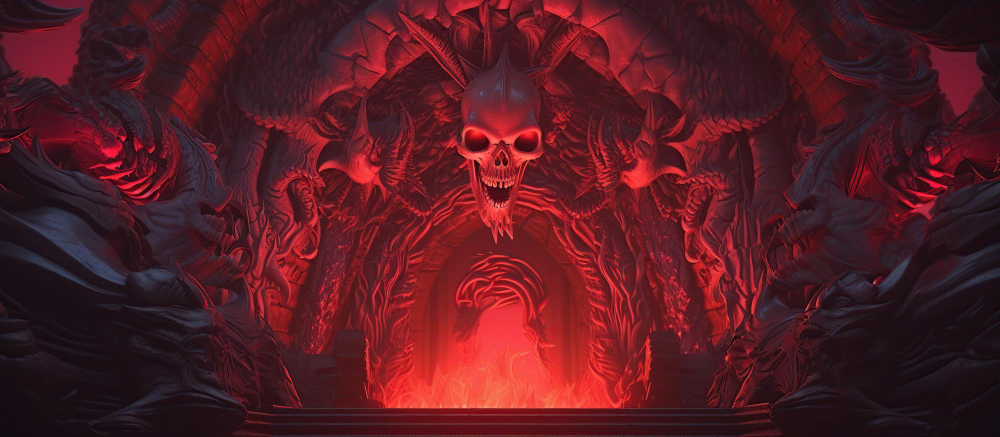
By contrast the myth of hell is the complete contradiction and the absence of a heavenly reality. It is devoid of God. It is the realm of the exiled one-third of heavens angels. The archangel, Satan, is damned and imprisoned there for eternity. It is a realm full of endless suffering and pain. The “real you” resides there and your real potential will never be met.
The Consequences
More than any other tenet of the Christian faith how the afterlife is defined determines every other tenet. The Christian faith is based on a system of reward and punishment. Our thoughts about spending eternity shape how we behave here and now.
The idea of an afterlife is not new in the Christian faith.
As we will see, the early Christians intensified their descriptions of the torments of hell. They certainly heightened the tortures linked to it.
Along the way, we will “thank” a 13th century Italian philosopher. Dante Alighieri contributed to the heaven and hell myth as we know it today.
Finally, we will look at how the Christian myth of the afterlife tried to answer the big questions:
- Why are we here?
- What is our purpose?
- Why do bad things happen to good people?
- How can I control events happening in my life?
- How do miracles happen?
Like all cultures, myths were borrowed from other cultures. Early Christians seemingly backed them up through the use of biblical “interpretations.” Yet, it looks more like they used them more as a decoder ring.
There were some leaps of faith taken by our Christian ancestors. Those leaps were not valid then and are not now.
It is clear that modern Christians are still leaping.
