
America First
(8 minute read)
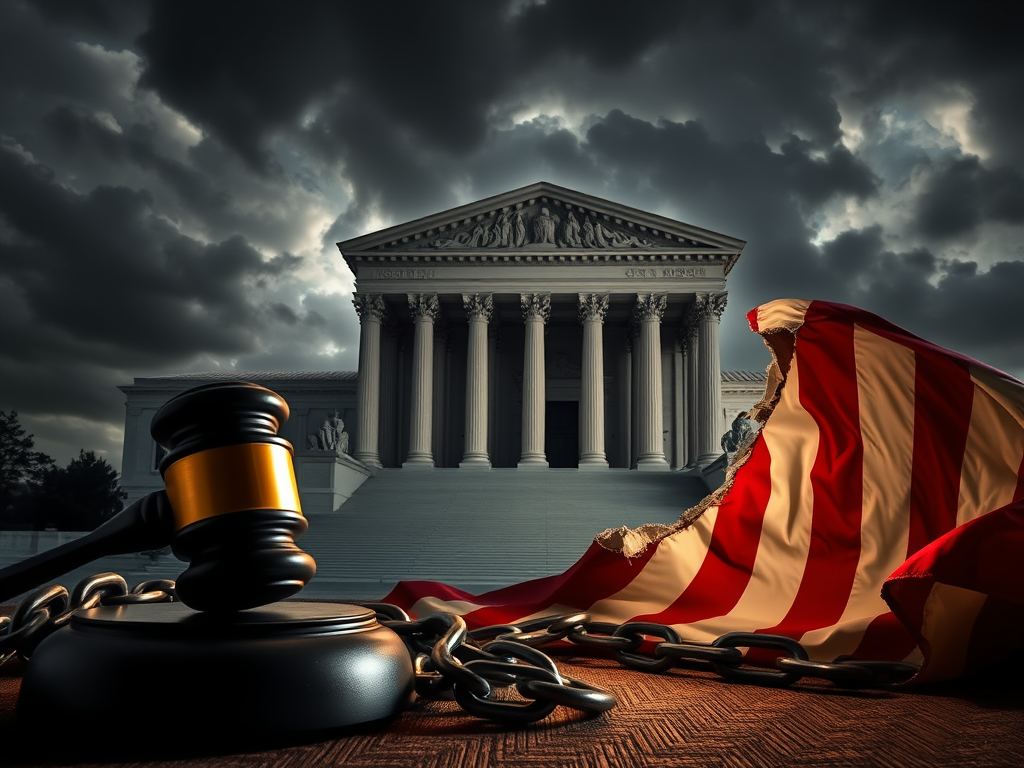
That “America First” is in both names of McMahon’s political action committee is no coincidence.
The phrase “America first” was first used as a Republican slogan in the 1880s. But it didn’t get national attention until Woodrow Wilson used it in a speech in 1915. He used it to describe his stance on staying out of the European conflict, now known as World War I. Over the years the phrase America First would be bastardized from Wilson’s original intent.
” ‘I am not speaking in a selfish spirit,’ Wilson began, ‘when I say that our whole duty, for the present, at any rate, is summed up in this motto, America First.’ …Wilson would go on to argue that America could demonstrate its friendship best by not showing ‘sympathy’ for either side, but by preparing ‘to help both sides when the struggle is over.’ “
– Sarah Churchwell, Behold America, Basic Books, New York, N.Y., 2018
After some years the phrase was picked up again, but used as code for a number of anti-democratic ideals. Wilson would wrongly be credited as the first American isolationist. As evidenced from Wilson’s quote above, that was not his intent. Any suggestion otherwise is either a misunderstanding of history or an attempt at legitimizing an ugly political ideology.
America First would eventually be adopted by white Southern segregationists, the KKK, and various fascist groups. They conflated the term with their separatist, racist, isolationist, and authoritarian ideals. They used it in the early 20th century while pushing “the next big national issue …America for pure Americans.” They argued it is time to decide what the future of the country should look like. Will it be all American for Americans or half alien?
Of course the debate with them was one sided. As if words and ideas weren’t enough, violence was always an option for America First.
“And in the meantime, even without the help of the Klan, white people had continued to brutalize black people across the country. Between 1889 and 1922, according to the National Association for the Advancement of Colored People (NAACP), 3,436 people were lynched in America – and that’s just the official records. No one knows how many more victims were unidentified and unaccounted for. Although the vast majority of victims were African-American, Catholics and Jews were also lynched, as were women. The Mexican government sued the United States for failing to take responsibility for the lynching of Mexican nationals; Italian nationals were lynched as well, including eleven suspected of murder in 1891.
“In the 1920 presidential campaign, lynching posed enough of a national crises the Republicans were urged to add a plank to their platform that would make it a federal crime. They did not adopt an anti-lynching policy.
“In the first half of the twentieth century, nearly two hundred anti-lynching bills were introduced to Congress. None of them passed.”
– Churchwell, Behold America
200 times and not one of them passed. 200 times! Let that sink in.
“Adding to the macabre nature of the scene, lynching victims were typically dismembered into pieces of human trophy for mob members.
“In his autobiography, W.E.B. Du Bois writes of the 1899 lynching of Sam Hose in Georgia. He reports that the knuckles of the victim were on display at a local store on Mitchell Street in Atlanta and that a piece of the man’s heart and liver was presented to the state’s governor.
“The mob turned the act of lynching into a symbolic rite in which the victim became the representative of his race and, as such, was being disciplined for more than a single crime.”
– Jamiles Lartey and Sam Morris, How White Americans used lynchings to terrorize and control Black people, The Guardian, April 26, 2018
According to Churchwell, White people, without Klan help, “turned lynchings into entertainment, with newspapers giving plenty of advanced notice.” They took place “in the cold light of day with families” in attendance. There were “picnics,” and crowds upward of “10,000 including local officials, police officers and children on their school lunch break.” Bodies were left to hang while photographs were taken of the dead bodies and later “printed into postcards.”
Lynchings weren’t confined to the South. They were rare in the North and when they did occur it would dominate news reports for days. Lynchings occurred in Illinois, Indiana, Maryland, and Ohio.
In the South? Well, it happened so often with complicity from the media that “it garnered much less attention.”
Even worse, less than 1% of all lynchers were ever prosecuted. North, South, East, and West.
In 1919 out of 82 nationally reported lynchings, “two were in Colorado, one in Washington State, one in Nebraska, and one in Kansas.” In 1920 three black men were lynched in Duluth, Minnesota. Two months later, 1,000 people stormed a jail in Texas and lynched a man accused of murdering a white woman. Later that year, another lynching occurred in Santa Rosa, California.
“Historians would later demonstrate beyond any reasonable dispute that violence against African-Americans was a backlash against the political and economic gains made in this period.
“The fact that economic competition led to lynching was acknowledge as early as 1903. The more minorities achieved economic autonomy and integrated themselves into the nations social fabric, the more retaliatory violence they provoked.”
– Churchwell, Behold America
White America really hates it when people of color do economically better.
When it comes to “all men are created equal,” America has never been of one mind. The cruelty of lynchings may not be a common practice these days. Yet, Americans manage to devise new ways of cruelty.
This is the ugly truth of what being “one hundred percent American” and “America First” means. Those embracing the ideology will publicly reject that statement. However, their rhetoric, actions, and their desired results can’t be denied. They want the same outcome as previous America First groups. And the empowerment they feel as a dominant group is their emotional Viagra.
America First organizations have always been a fringe minority group of people. The majority of Americans today still value democratic principles.
What prior and modern day America First supporters are attempting is a restoration to something they think they have lost. Namely, an old social order of racial and economic dominance. Historically, segregation, isolationism, and fascism fit into those ideals and these groups used each other to grow their numbers. Each intentionally developed code words or jargon obvious to the speaker and their cohorts but intentionally not to outsiders.
After the Klan started using America First as a rallying cry, it was dropped from most political campaign slogans. Before long, America First, merged with old and newer xenophobic, jingoistic political movements. “One Hundred Percent,” “Pure American,” and “Patriotism” began to be code words and synonymous with “America First.”
“One hundred percent Americanism” was used as a code for debates about “hyphenate” Americans: Italian-Americans, Irish-Americans, Jewish-Americans, etc. The argument railed against immigrants that continued to have an emotional connection to their homeland. One could not be trusted if they self-identified with their country of origin. “Drop the hyphen,” they were told. “To use one proved you were un-American.”
“Pure Americanism” is an offshoot of the “one hundred percent American” ideology. It demands a stricter racial and ethnic purity. This purity test was nothing new. It was being used for the “one-drop rule,” a legal status to determine the rights of an individual. Despite there being no difference in blood, i.e., all blood is the same, “one drop of Negro blood” made a person legally black in the United States and, therefore, subject to slavery.
The badge of honor worn by those included in these clubs is “patriotism.” How do you get that badge? Well, if you are lucky you are born into it. White, preferably with Northern-European ancestors, are considered the “real patriots.” Patriotism, love for one’s country, then isn’t the real measurement here. The distinction is ethnic, racial, and nativism.
It may seem that we are living in overwhelming times. For most of us, this is the closest we have come in our lifetime to maybe losing a democracy. There are no guarantees that it prevails. Every generation has to decide for themselves whether it is worth it to rise up and repel anti-democratic forces.
“Democracy has to be born anew every generation, and education is its midwife”
– John Dewey, Democracy and Education, 1916
For nearly three-quarters of a century, as a nation, we have had the pleasure of living with increasing freedoms and prosperity. Has it been perfect? Obviously not. Could it be a hell-of-a-lot better? Absolutely. But we, as the majority, are the ones to decide what kind of America we want to live in.
If history teaches us anything it is that we have been here before. Arguably, the good news is that our nation emerged better. Not perfect, but better.
Read The University In Crises, (Pt. 9)
Sources:
- Sarah Churchwell, Behold America. The Entangled History of “America First” and “The American Dream,” Basic Books, New York, N.Y., 2018. The influence of Churchwell’s work is felt throughout this article.
