
(7 minute read)

Manner, Definition; a way in which a thing is done or happens.
In a recent post on Quora, there’s a question from a user about the value of beliefs. This topic has been a life-long interest of mine.
Quora, defines itself as “a place to share knowledge and better understand the world.” In other words, it is meant to be a safe place. Users can gather here to share their experiences understand the world we live in. This has been a venture for the human species since the dawn of man.
Being a proponent for the advancement of technology and the democratization of the Internet I like that sentiment. I am familiar with the existence of Quora, but not a user. I have been around long enough to remember using Bulletin Board Systems (BBS). BBS was the precursor to Chat Rooms and subsequently Quora and Reddit. There really was nothing “new” there.
BBS was established in the early days of the first wave of the Internet. It functioned similarly to the Quoras and Reddits of today. It resembled all the other permutations used now. They were static boards with posts and responses listed in chronological order. Chat Rooms have the advantage of answering/questions ahappening in real time. In contrast, BBS responses are a bit more snail-like. Post a message and wait for a response.
Of course the one big difference to BBS is that most of them were “closed” networks. There were some exceptions. Administrators created a strictly “members only” users club. Here, experts or those striving to be, exchanged ideas and research in a particular field of study.
Engineers, scientists, and teachers gathered in one area. Professional and experts posted news, information, questions, research, and ideas to their peers.
When Chat Rooms came onto the scene, BBS’ faced heavy scrutiny. The lay person didn’t like the exclusive online country club feel and elitism of the experts. They were condemned as being outdated, clunky, and run by those who were unwilling to engage with novices. People judged users of BBS as isolating themselves creating an “echo chamber” of ideas.
This echo chamber would later become known as “siloing.” Confirmation bias via the systematic rejection of opposing viewpoints, reinforcing biases, and echoing only one sided arguments.
Except, it turns out, most of us do that anyway. Today that criticism is hurled at all enclaves of expertise as a full-throated “campaign against established knowledge.”
Chat Rooms, Quora, and Reddit are open systems. Anyone can post something to a group of people. They can also share their ideas. The idea is that this is the real practice of the democratization of the Internet. Eggheads and experts be damned!
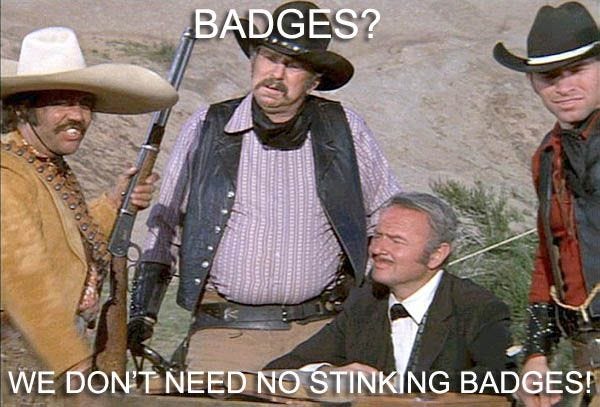
Blazing Saddles, Mel Brooks, Director, Crossbow/Warner Bros., 1974
However, BBS and the experts never went away. Quora and Reddit developed much later in the second wave of the Internet in the mid and late 2000’s. They came into existence and work much like the old BBS, without the exclusivity.
I like the idea of a democracy of ideas. However, I don’t find platforms like this very helpful in finding clear and precise answers to questions. If I really need an answer I’d still rather look to the experts.
I find places like Quora and Reddit helpful. They serve as a somewhat reliable source in gauging what some “average internet citizens” are saying about a particular subject.
The market square today serves multiple purposes. Individuals gather to buy goods and services. They also share the latest news, information, and gossip with one another.
What BBS, Chat Rooms, Quora, Reddit, et.al., do is create a sense of community. People who are inquisitive (or are looking to be entertained) can find like minded individuals. They can explore various subjects. These include the value of beliefs, philosophy, and science. They can also discover topics like aliens, Bigfoot, the Loch Ness monster, and …cats.
Of course the users of Quora and Reddit are hardly “average.” Though open to the masses, very few of the masses ever use them. While each platform respectively boasts 300-500 million users worldwide there are nearly eight billion people in the world.
In other words only 3-5% of the world’s population at best have visited the sites.
Upwards of 500 million is impressive but hardly a number that warrants the declaration that “everyone says.” And if that isn’t enough to convince anyone that the numbers are small. Consider this: Only 10% of the users are posting 80% of the content. Again hardly a number that warrants saying everyone says.
These companies surely have enough users to gather a nearly $278M in 2023 revenue for Quora. They also have $804+M for Reddit. However, they only reflect a very small portion of the population.
Why It Matters
I hope that these examples disabuse you of the notion that “everyone says.” Where we get our beliefs and how we reinforce them matters. This is just as important as what and how we believe.
In fact, some argue that “where and how we accumulate our beliefs” is more important. It is greater than the “what and how we believe.”
In a previous article I wrote about a critical thinking exercise I often conducted with students. While the social issue chosen mattered very little, i.e., gun control, politics, religion, philosophy, etc. The purpose of the exercise was for students to examine in detail the “how” and “why” they held their beliefs. Usually I would take a controversial current event and ask the class to weigh in one way or another.
“You heard about the school shooting in _______? How many of you are for some form of gun control? How many are not?” (Unfortunately that social issue had been a regular occurrence).
Looking for an eager face of a student I would call on them to explain their position.
“I believe/think there should be …” and their explanation followed. It didn’t matter to me what their reasoning turned out to be. I waited for them to finish. Then, I would ask …
“Yes. But why do you believe/think that?” Further explanation would often be provided followed by …
“Yes. But how did you come to believe/think that way?” Further explanations continued.
“Yes, but where did that belief come from?”
Inevitably, the questions led to an explanation. At some point, an “authority” figure told them that it was true. A church leader, a politician, a parent, aunt, uncle, friend, etc.
Eventually, the students would catch on. I always had very bright students. Then I would make my point. We would explore each issue as they arose.
- We often take for granted our beliefs or opinions, not knowing if we have ever really thought about if they are in fact true and why they are the “truths” we have settled on
- That, sometimes, those very beliefs and opinions are not our own
- That it is often difficult to fully know and confidently show why it is that we believe or think the way that we do
It is also important to note that we must be determined to distinguish fact from fiction. We have to genuinely want to know the truth. We also have to be determined to not only want to know the truth. We must know that we know the truth in an undeniable way with some room for uncertainty. The certainty is based on fact and not fiction. The uncertainty is based on we may not always get it right AND things change. Truth and facts far outweigh assumptions, beliefs, and opinions.
When it came to the art of persuasion, Socrates taught his students important lessons. He emphasized that when making logical arguments, they should reproduce ideas and truths. It was not enough to make assumptions and quote authorities in their arguments. One needed to know why the particular truth was true. It should NOT BE BASED SOLEY on what others have said about the subject and assumptions.
We are not born with inherent belief systems. We are taught them. Sometimes those teachings fall far short.
Read Pt. 2 of Exploring Beliefs
Discover more from It's Worth It!
Subscribe to get the latest posts sent to your email.
