
(8 minute read)
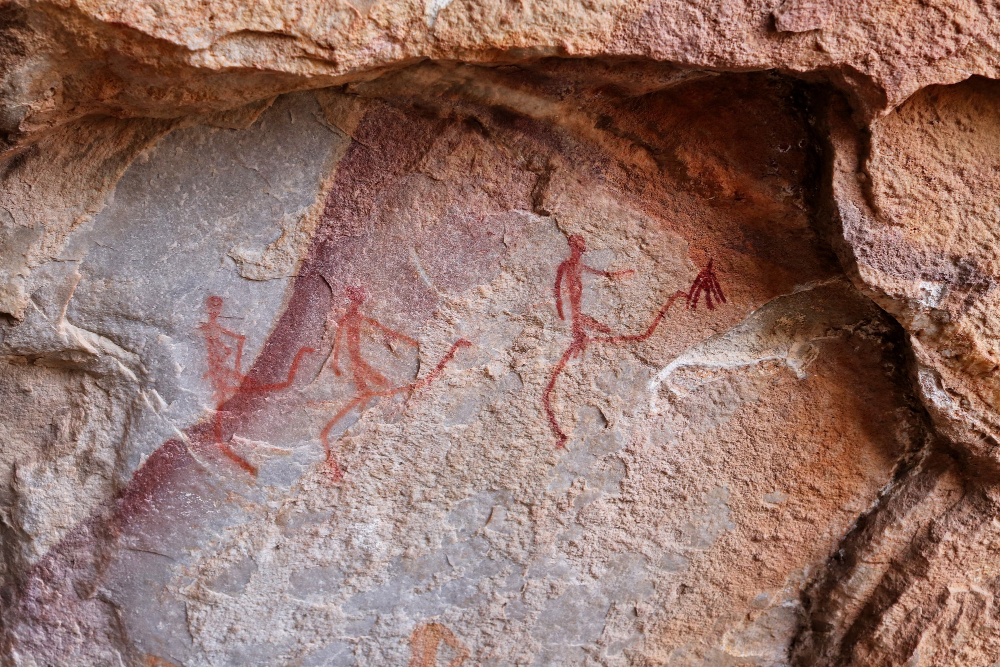
Ancient prehistoric drawings. Image by wirestock on Freepik
The earliest recorded attempts at creating myths date back to the Ice and Stone Age. Cave drawings by Homo sapiens are nearly 40,000 years old. Around 400 caves depict prehistoric works of art and are found mainly in Europe.
Their purpose of their existence is believed to be religious and symbolic in nature. Explicit meanings of the drawings are hard to decipher. However, many people believe they were crucial for a religious leader’s effort to communicate myths, beliefs, stories, and practices. In other words, an effort to create truths b y telling stories.
It is difficult to come up with one definition of what a myth is. It can be many things to many people. Myths span great distances of time. It is a way of communicating. It serves as a tool to aid in defining the important values of a society. These values and its culture give meaning to life for its citizens.
The Greek & Roman Myths
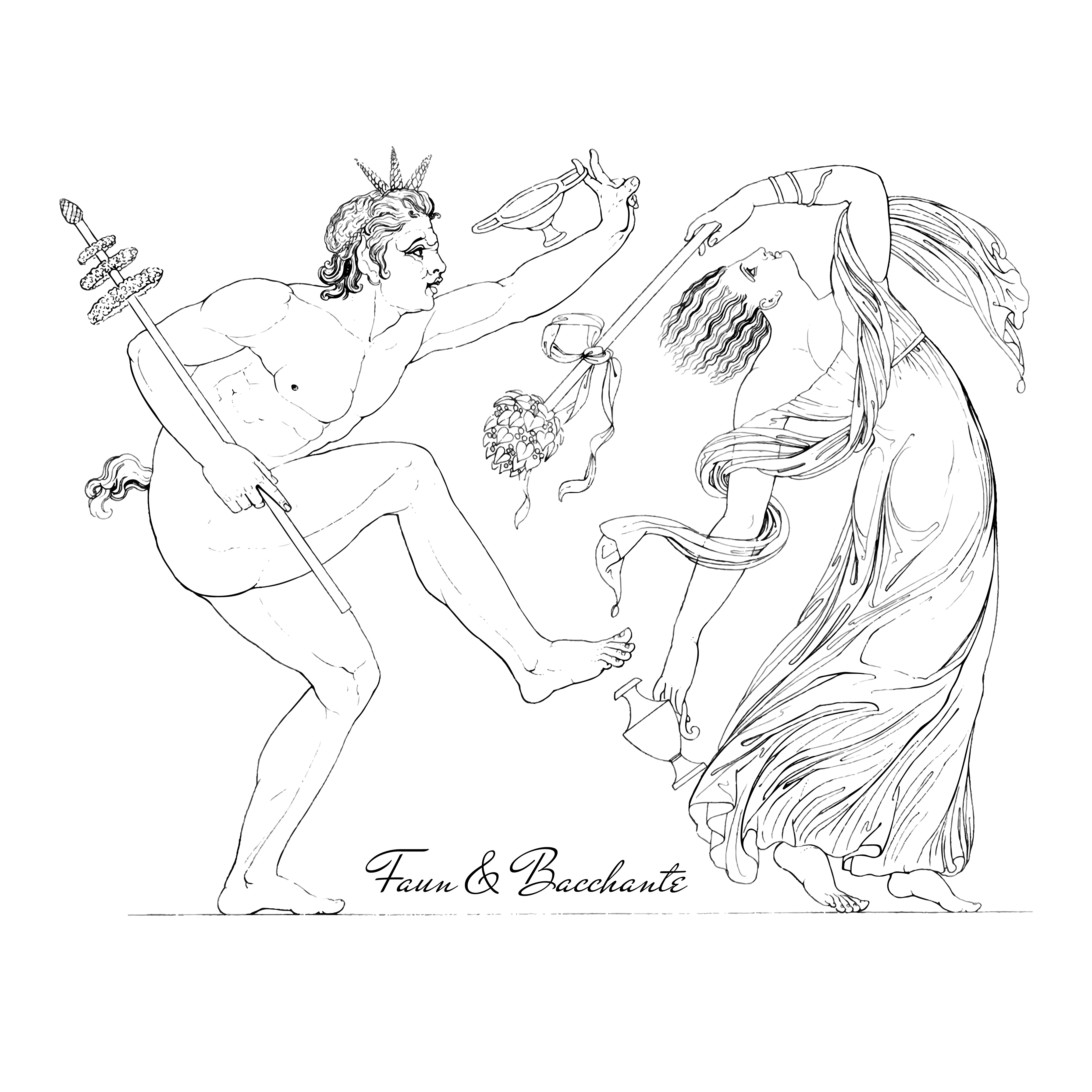
Roman/Greek Faun and Bacchante, Thomas Baxter, 1810. Image by rawpixel.com on Freepik
Nearly 2,500 years ago, the Greeks developed a mythology. They did this to explain the world in which they were living. But the Greeks are hardly the sole proprietor of mythology. They freely and readily borrowed myths and gods from the Egyptians. As we will see, the “borrowing” of myths, religious icons, and rites, becomes a familiar theme throughout history.
It turns out there are very few unique thoughts and ideas about man. This is particularly true concerning their gods and myths. Throughout history, myths have consistently threaded through all cultures. They have existed both adjacent to one another and independently. The use and familiarity was and is still ingrained in our DNA. It is known as the god part of the brain.
Every culture of every era develops a mythology. The Greeks remain in the forefront. Their culture has had significant influence on Western thought, i.e., logic and reasoning. Like other cultures, the Greeks used mythology as a way of connecting their past, present, and future. They used their myths to define what it is to be human. They also created an identity for tribes, communities, and the nation.
Nearly 1,000 years later, the Romans claimed almost all of the Greek gods. They renamed them and spun their myths for their own advantage. Zeus is renamed Jupiter and given Roman qualities. Poseidon becomes Neptune, and so on. Same gods, different names, and very different emphasis on their myths.
For example, the Greek gods were molded by what was considered to be the perfect human. They had chiseled bodies and were cunning and intelligent. They were also capricious and motivated by love and hate. Their gods were real and had form and their myths emphasized that.
On the other hand, the Roman gods had no physical form. They were loosely defined. This left so much more to the Roman’s imagination. The myths of their gods followed that logic.
The Greek myths emphasized life conducted here on earth. They did not consider the afterlife to be an “upgrade.” In contrast, the Romans stressed the importance of an everlasting life and constructed their myths correspondingly.
It is here that we start to see a pattern forming and one that can’t be ignored.
Firstly, creating a belief system explained the world in which tribes, communities, and nations were living. This was, and still is, part of the human experience.
Secondly, when it came to creating a belief system, none of these cultures were coming up with original ideas.
The norm was each would freely and readily borrow gods and myths from earlier or current cultures.
Thirdly, while each culture borrowed myths they altered them for their own advantage. Despite these changes, there are basic common values found throughout. These values reflect the human condition.
Values like empathy and the love for fellow human beings are essential. Ethical standards like justice and integrity guide human beings. They help us live in harmony and peace with one another.
Again, these values fit into just about every religion or philosophy in existence today.
We have established that “myth making” has been with us for a very long time. Now, let us leap forward in time. We should consider how myths permeate cultures closer to our own.
The example that follows does date back to the Greeks. However, Zeus and company and all their myths are not really that well known to the average person.
There is a group of writings that have wider recognition. This is particularly true for parents and their children.
They do not require adherence to a particular religion. You can accept and understand its teachings without a specific philosophy.
Aesop and His Myths of Morality
One of the more widely known works of myth has traditionally been created to have come from a Greek slave.
It is doubtful that there was an historical Aesop. However, the collection of morality tales credited to him has lived on for over 2,500 years.
Their are no original manuscripts in the collection of Aesop’s fables. They have been handed down over the centuries. Initially, they were shared orally. Various written permutations followed.
Since the Middle Ages, variations of Aesop’s Fables have been continuously in print. They are available today in just about every language.
While originally written for an adult audience, today the quaint myths have largely been relegated to children’s books.
The highly moralistic stories are told to instill Western universal qualities, truths, and values.
The need to stress the evolving myth making works of Aesop, I hope, becomes self-evident.
Most of the morality myths under the Aesop umbrella fit nicely. They align with just about every religious or philosophical principle or belief.
- Treat others how you would like to be treated …The Lion and the Mouse
- Honor families …The North Wind and the Sun
- Be truthful in everything you do …The Boy Who Cried Wolf
- It is vital to cultivate an inner life …The Fox and the Mask
The golden thread of Aesop’s truths runs through the time of Western thought from the Greeks to present day. The stories told therein promote, teach, and reinforce the highest of human values. They are a shining example of the value of myth that transcends religious, philosophical, and political worldviews.
It is hard to imagine anyone arguing convincingly that the myths are outdated and no longer needed. The stories are judged to be trite. They don’t hold the attention of a culture of video gaming and social media savants. Their usefulness in establishing values in the first stages of children’s early development fades in the background into adulthood.
Why Myths Are Still With Us
The term myth has a variety of meanings to different people. It is clear that many of us bristle at its use. Admittedly, many Western cultures often associate the term myth with things that are untrue. These include lies, fables, or falsehoods.
We have a snobbish attitude towards the use of the word. Yet, we are still a culture actively clinging to our myths, heroes, and stories.
I do not intend to rescue the use of the word myth to its original meaning. That is something commonly left in the halls of academia. Returning definitions to their original use and intent is more common there.
However, if myth making (the art of storytelling) is dead why do we still cling to these stories? Why do we still find it fascinating to tell stories?
We love to read, hear, or see stories about people, places, or things that are bigger than us. Simply put, we have not evolved as a species beyond its usefulness.
We are not a species that no longer requires stories. and myth making in order to define meaning, values, and truth. And so, the art of myth making is still alive and kicking.
Storytelling, or myth making, is our “first fumbling attempt.” It tries to explain how and why things happen in science, religion, and philosophy (Bierlein). That “fumbling” is a form of communication. It “told ancient people who they were and the right way to live.” It continues to inform us today (Bierlein).
“Our lives today are saturated with myth, its symbols, language, and content, all of which are the common heritage as human beings. Fables, fairy tales, literature, epics, tales told around the campfire, and the scriptures of great religions are all packages of myth that transcend time, place, and culture …[helping] us to recognize the beauty of the unity in human diversity: We share something with all other peoples in all other times.”
Bierlein
We may think that we are a more sophisticated society that no longer relies on the use of myth.
We would be wrong.
Read Myths and Their Impact, Pt. 3
*Editor’s note: this post was updated to correct the Greek’s definition of the afterlife.
Discover more from It's Worth It!
Subscribe to get the latest posts sent to your email.
