
(8 minute read)
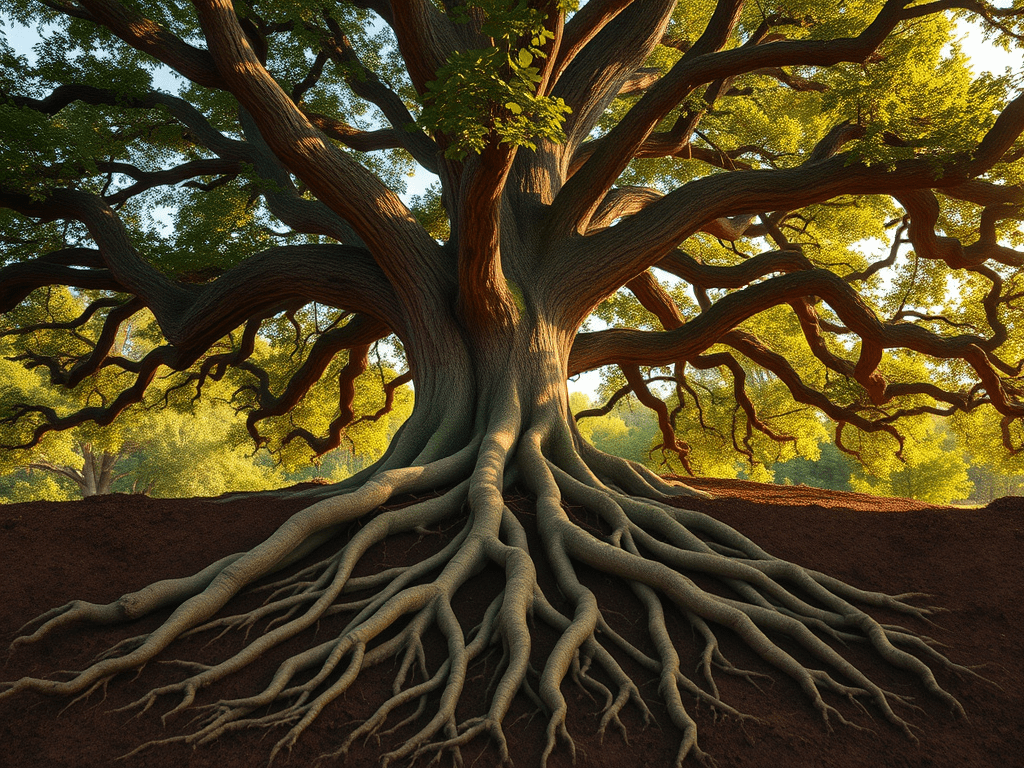
Or More Importantly, What Are We Doing Here?
Meaning is invisible, but the invisible is not contradictory of the visible; the visible itself has an invisible inner framework, and the invisible is the secret counterpart of the visible.
M. Merleau-Ponty, Working Notes
Growing Down
Twentieth century French philosopher Merleau-Ponty spent his career researching the relationship between the “mind” or consciousness and the body. He was a proponent of free will. He believed each person is responsible for developing their own fate “through acts of the will.” His writings influenced philosophy in the studies of anthropology, architecture, art, environmental studies, feminism, film studies, language, and politics.
It’s interesting to note the quote above given our topic for this article, growing down. James Hillman in The Soul’s Code dedicates an entire chapter to the idea.
We need to rise above the idea that we are only the sum of our genetic and environmental surroundings. There is a third way that supersedes heredity and environment. It is how we define ourselves, i.e., the particularity we “feel” ourselves to be.
Over the centuries, the Western language we use for self-improvement implies a lifting up. It suggests a higher calling and anything that makes us think we are rising above our circumstances. Though, there is a lesson in the old adage. “You are too heavenly minded to be any earthly good.”
Our Western language of “looking up” could benefit from some concepts from Eastern religions and philosophies. These include the need to “grow down” or be grounded. This doesn’t sound very “sexy.” Let’s face it, we don’t plant trees and then dig them up to admire their root systems. It wouldn’t be practical for a number of reasons.
The beautiful part of the oak is the trunk, branches and leaves. That’s the part that’s most visible, admired, written about, and coveted. But an oak tree is only as good as its root system. Sounds like something someone’s grandmother might have said …sometime …somewhere.
The roots are what gives plants their structure. The healthier the roots, the healthier the whole plant. It’s where the plant gets most if its nutrients. First, the soil must be rich in nutrients. Second the roots must to be able to absorb the nutrients. Take away one or both of these factors and the chance for survival is slim to none.
The metaphor of the mighty oak growing from the lowly acorn is more than appropriate for this study. Before anything is seen above the soil, the acorn grows a long tap root. It first grows vertically deep down into the soil. Once it’s anchored itself deep enough the root begins to branch out in every direction. A fully mature oak tree can have hundreds of miles of roots buried deep beneath the soil.
For several weeks, the acorn’s energy focuses on developing these root systems. There is very little to no sign above ground that something is growing underneath. Once the root structure begins to take hold then evidence becomes available that growth is taking place above the soil. Eventually the oaks roots are so solid they are able to withstand the greatest of winds.
For many cultures, religions, and literature, the oak tree has been a symbol of strength, assurance, staunch resistance, and knowledge.
…instead of a spirit of despair they will be called oaks of righteousness, a planting of the Lord for the display of his splendor.
Isaiah 61:3, First Testament
Oak trees come out of acorns, no matter how unlikely that seems. An acorn is just a tree’s way back into the ground. For another try. Another trip through. One life for another.
Shirley Ann Grau, 20th Century American Writer
Two live oaks stood at the end of the Radley lot; their roots reached into the side-road and made it bumpy. Something about one of the trees attracted my attention.
Harper Lee, To Kill A Mockingbird
Growth is often synonymous with enlightenment. The light bulb goes off, the heavens open up, the scales fall from our eyes. Revelation and enlightenment and we are changed in an instant. Suddenly and without much expectation everything seems to make sense. It can be profound. It is only one moment in time. If we’re lucky enough to experience one its beauty lasts us a lifetime.
Growing down takes time. Sometimes a long time. Often a lifetime. Growing down is committing to the long game. It’s not the the most exciting part, but it makes everything else worthwhile. Growing down and the things we learn from it is often hidden from others, as it should be. It’s ours. To share with no one.
Don’t believe me? Go ahead and try to explain to someone some profound insight you may have. Try as hard as you might and the words become useless. Like trying to explain last nights dream, the more we try …the further we get away from the emotions, the deeper meaning. It’s almost impossible to fully communicate. It’s supposed to be. Those are the “growing downs” that are meant for us and only us.
So, stop trying to tell others about those things. We don’t have to. We learn to keep it to ourselves. It’s our “power.” We need those moments to be grounded. So that we can get on our feet.
To plant a foot firmly on earth–that is the ultimate achievement, and a far later stage of growth than anything begun in your head.
Hillman, The Soul’s Code
Growing down is often a struggle because it’s difficult to see the roots below the surface. And sometimes what’s found below the surface is deep dark despair. The dedication to growing down requires “the soul to deepen into life.” The myths created by theologians and philosophers alike are meant to remind us of our place in this world. They encourage us to be involved in it. The physical realm, reality, has a way of reminding us that we are still here.
Feelings of loneliness, broken hearts, and rejections are still ever present. Feuds, dismissals, and accomplishments also remain. Celebrations, victories, and connections with family, friends, and neighbors persist. Lovers, ruts, and routines are part of life too …sometimes overwhelming us.
There are “philosophies and pharmaceuticals” available galore. They aim to help us get over them. Yet, in the end, they only serve to remind us. They reduce us to being victims. Each unpleasant happening listed above can create strife, anger, hatred, and anxiety. However, each also shows that we are still alive.
[Others are] not that different from you, are they? Same haircuts. Full of hormones, just like you. Invincible, just like you feel. The world is their oyster. They believe they’re destined for great things, just like many of you. Their eyes are full of hope, just like you. Did they wait until it was too late to make from their lives even one iota of what they were capable? Because you see, gentlemen, these boys are now fertilizing daffodils. But if you listen real close, you can hear them whisper their legacy to you. Go on, lean in. Listen. You hear it?… Carpe… Hear it?… Carpe. Carpe diem. Seize the day, boys. Make your lives extraordinary.
ROBIN WILLIAMS AS JOHN KEATING, DEAD POETS SOCIETY, TOUCHSTONE PICTURES, ET. AL., 1989.
To close out these series of articles, Hillman provides a quick primer for the Platonic model for growing down. The soul descends down to earth in four different but very connected modes; the body, parents, places, and circumstances.
- The body continues to grow old and down until, finally, it literally or metaphorically, resides below the soil
- The parents, family tree, and tribe we are joined to with all its majesty …and twisted, gnarly, sometimes dead or rotting branches
- The places that suit where we put our roots down, with or without family or tribe, with all its “duties and customs”
- The circumstances that we are given, and what we give back, declaring our commitment to the process of growing down
All of these myths are created to inspire us to begin to write our biography, Who Are We Really? Who Am I? is the first question each of us begin to ask when reaching the age of personal awareness. That day when we become aware that we are a sentient individual human being.
Sometimes in our search we are given the gift of insight, epiphanies if we’re lucky, with great flare and flash. More times than not, however, growth comes from a simple act. It involves growing down into earthy, dirty, messy, and smelly life. This life is full of richness. It is deep, life affirming, and every-day life. Growing down is just as important as growing up.
How we answer Who Are We Really? is often dictated by how we define and perceive our own process of growing up and growing down.
Discover more from It's Worth It!
Subscribe to get the latest posts sent to your email.
