
(4 minute read)
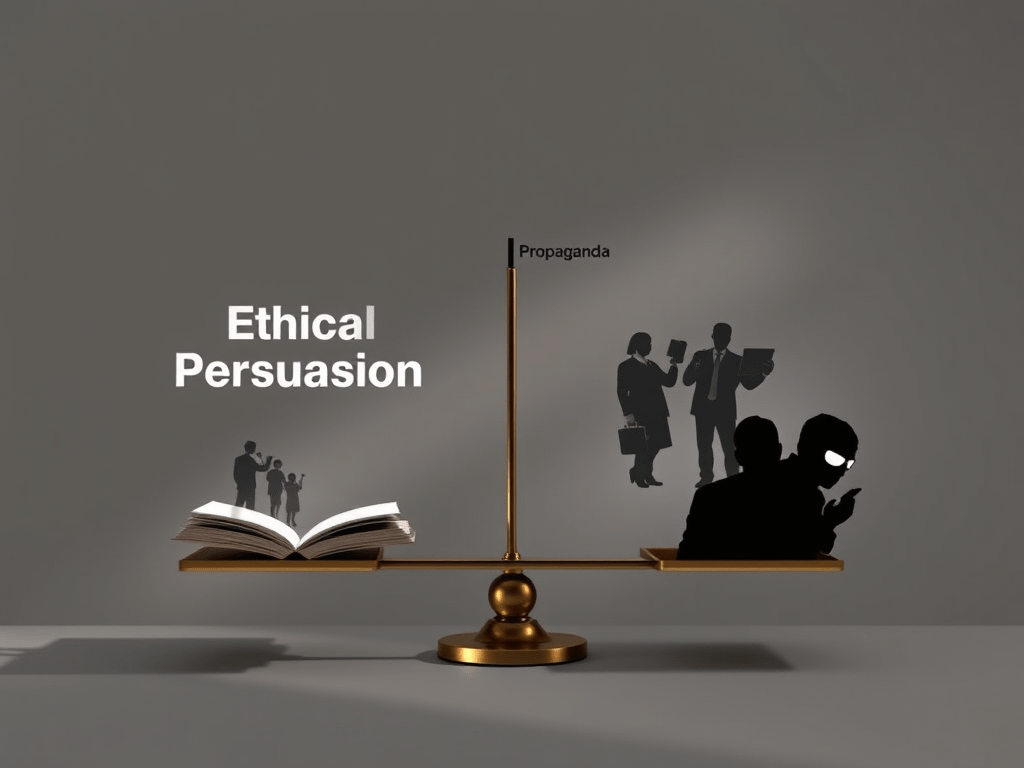
Ethical Persuasion
I have made it a habit when discussing or writing about advertising, business, media and public relations, etc., to add some form of the word “ethics” to the vocabulary. This is a purposeful exercise I do for a couple of reasons.
First, it seems that in our society, the line for doing what is right is at best blurry. The line for being honest and trustworthy is no longer clear for a lot of people. In some ways, it has totally been wiped away. In fact, in some areas we are so far beyond the line it is no longer seen.
Have you noticed the news and the political climate lately?
Second, it’s been necessary to talk and write more about ethics over the years.
I am now retired. Yet, there was a growing number of struggling college students who were incapable of handling complexity. The world is not to be judged in black and white terms. But their genuine inability to distinguish the difference between right and wrong was astounding.
Despite student codes of conduct over the years there was a steady stream of cheating students. Not all, but certainly enough to be a concern. They systematically displayed behaviors showing their lack of standards, ethics, or morals. They had no qualms about cheating. They were just as happy getting someone else to write an essay. They then handed in the work as if it were their own.
Be assured that this is not an out of touch assessment. I am aware that there has always been a cheating segment of students inherent within the system. That’s a given. But today they come with something rarely seen, the lack of shame while being confronted with evidence of wrong doing.
Again, not all but enough to be a concern.
In fact, the “what’s the big deal” attitude is rampant and well known among the student body. When confronted with evidence the students’ explanation is that “everyone is doing it.” They then claim they are the ones being picked on or singled out. In other words, they are the real victims here.
Persuasion: A Better “Ethical” Definition
Persuasion is the process of ethically influencing another person’s attitudes, behaviors, beliefs, or values. It involves ethically using factual information and ethical emotional appeals. The goal is to ethically change a person’s mind and to ethically promote a desired behavior.
I know. That’s a lot of ethical-ities.
In an earlier article we defined propaganda with almost similar words, appropriately without the smattering of the word “ethics.” What makes the modern use of the word propaganda different from persuasion is the questionable techniques and manipulations.
Aristotle taught his students how to develop ideas while providing the best model for them to communicate to society. The ideas are collected, reasoned out, put in a logical order and then communicated. Doing all of that credibly, factually, and passionately was known as the art of propaganda. It involves the practice of forming ideas and telling them to larger audiences to persuade.
Academically, we all use propaganda when communicating. It’s not the one’s we disagree with, the “other side” that we save that word for. When arguing in favor of an issue, we all use our go-to list. We passionately bring up things to prove our point. When we do this we are practicing what Aristotle taught his students, the art of propaganda.
Aristotle would not have labeled a student’s questionable techniques and manipulations as propaganda. He simply would have referred to the student as someone who is in error and was not telling the truth. There was no splitting hairs for Aristotle.
Again, it is not my intention to rescue the word propaganda. Our society will never go back to using it the way Aristotle intended.
I bring this up here to make all of us aware of the distinction. It will help us be more precise with our communications. Also, there are those of us that are using these tools knowing that not everyone is aware of them. It helps to know that we can level the playing field and use the same tools as well.
Knowing that we all formulate messages in ways that are meant to be communicated is vital. We are not all that much different.
Persuasion vs. Propaganda, Pt. 5.
Discover more from It's Worth It!
Subscribe to get the latest posts sent to your email.
